
Economic Sectors
-
Commercial harvesting or fishing includes finfish and shellfish fishing. It comprises commercial fishermen using various gears onboard large vessels and small boats.
-
Seafood processing primarily includes canning and fresh and frozen seafood processing. It involves plants engaged in primary wholesale and processing of seafood products.
-
Seafood importing was added to the seafood industry, starting in 2009. It comprises establishments that buy seafood products from countries of origin outside the United States.
-
Seafood wholesaling corresponds to fish and seafood merchant wholesalers. It includes secondary wholesale and processing of seafood products.
-
Seafood and fish markets correspond to the retail trade of fish and seafood products.
-
Seafood restaurants include the retail trade of seafood products by eating and drinking places.
Economic Impacts
The NOAA Fisheries Economic Model generates estimates of four types of impacts: employment, income, total value added, and output. The income, total value added, and output impacts are expressed in dollars for the year specified by the user. Employment impacts are expressed in terms of a mix of both full-time and part-time jobs. The total economic impact is the sum of direct, indirect, and induced impacts. Indirect impacts arise from changes in the economic activity of other industrial sectors that supply goods or services to the sector under evaluation. Induced impacts result from personal consumption expenditures by industry employees.
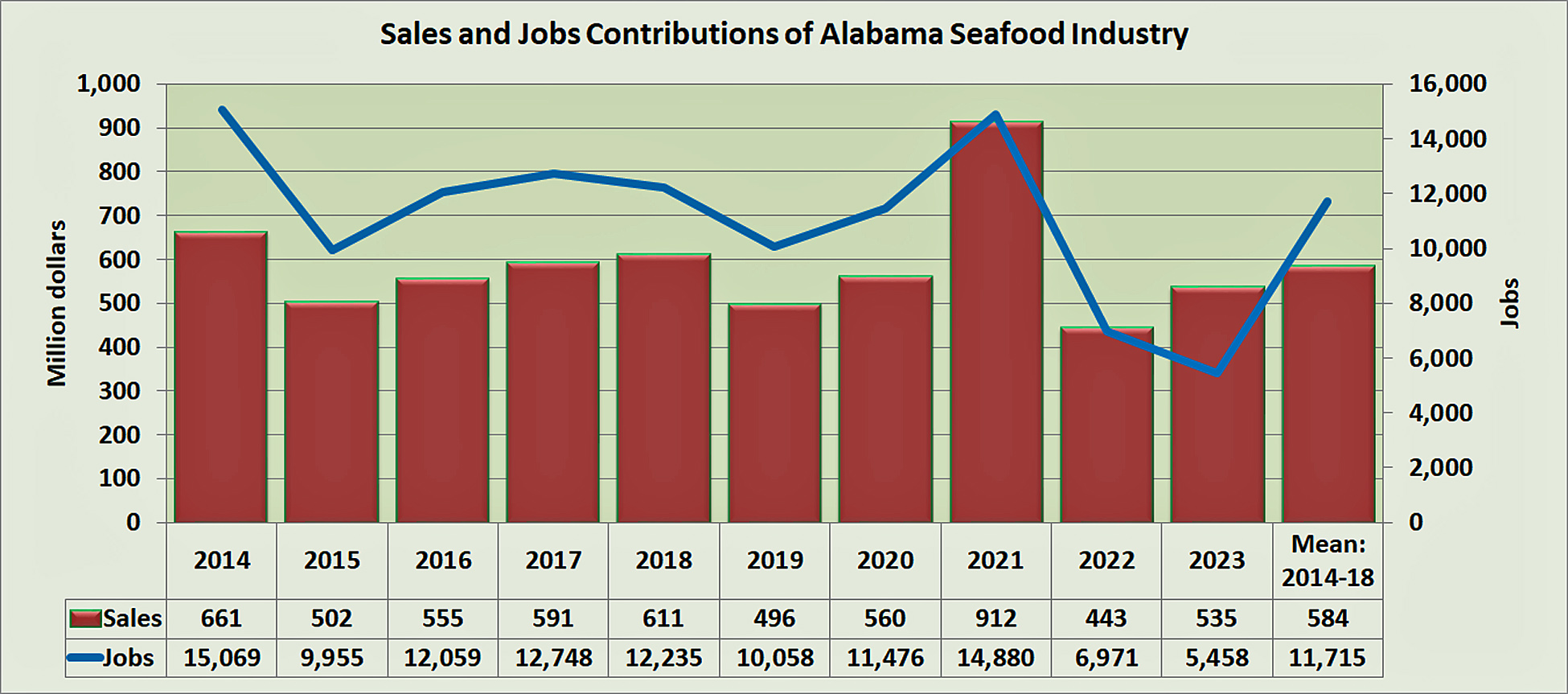
Source of raw data: NOAA FISHERIES.
Sectoral Economic Contributions of the Seafood Industry
Links to the Economic Impacts in the U.S. and other states